

Skip to content
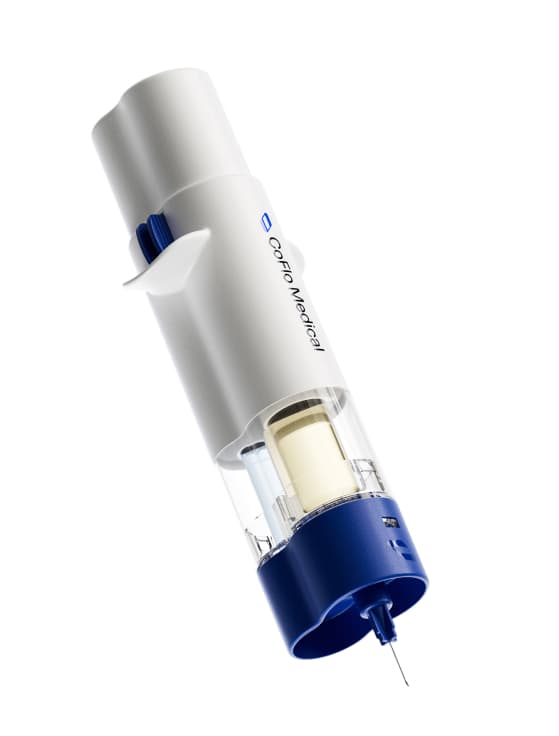
The CoFlo autoinjector, with its sheath fluid and drug cartridges visible through the window

Inject the uninjectable

Our core annular flow technology removes the viscosity constraint on formulation development, so concentration stops setting the terms of delivery.

Giving back to patients by streamlining drug delivery

Challenging formulations can mean hours in a hospital each week for patients with chronic diseases. Core annular flow makes those same formulations easy to deliver at home.

Contact us
A grandfather holding his smiling granddaughter outdoors

How CoFlo works

Deliver any viscosity

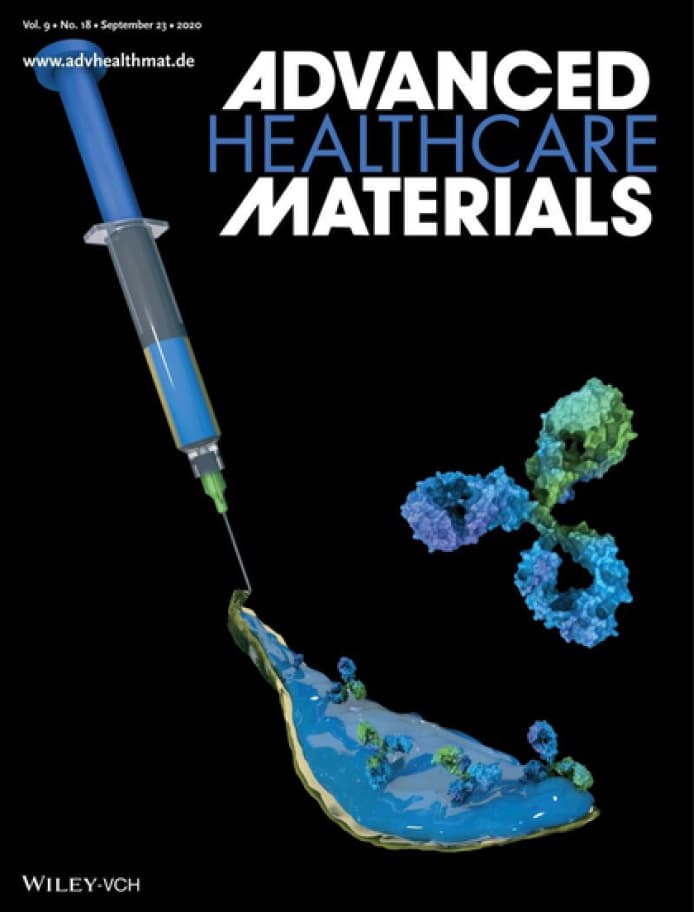
Conventional injection force rises with viscosity until it becomes impossible. Core annular flow breaks that relationship: a thin sheath of low-viscosity fluid shields the drug from the needle wall, where shear is highest, so concentration stops being a limit on delivery.

Up to

10,000 cP

Injection force plotted against viscosity, from 10 to over 1000 cP. Force with conventional devices climbs steeply as viscosity rises, while CoFlo devices stay flat across the whole range.
Read our white paper(opens in a new tab)

Introducing core annular flow technology

Core annular flow is a physical solution that changes how a drug moves through the needle, not what the drug is. It serves as a platform across molecule types, volumes, and routes of administration. Sheath fluid shields the drug from the needle wall, reducing viscous drag.

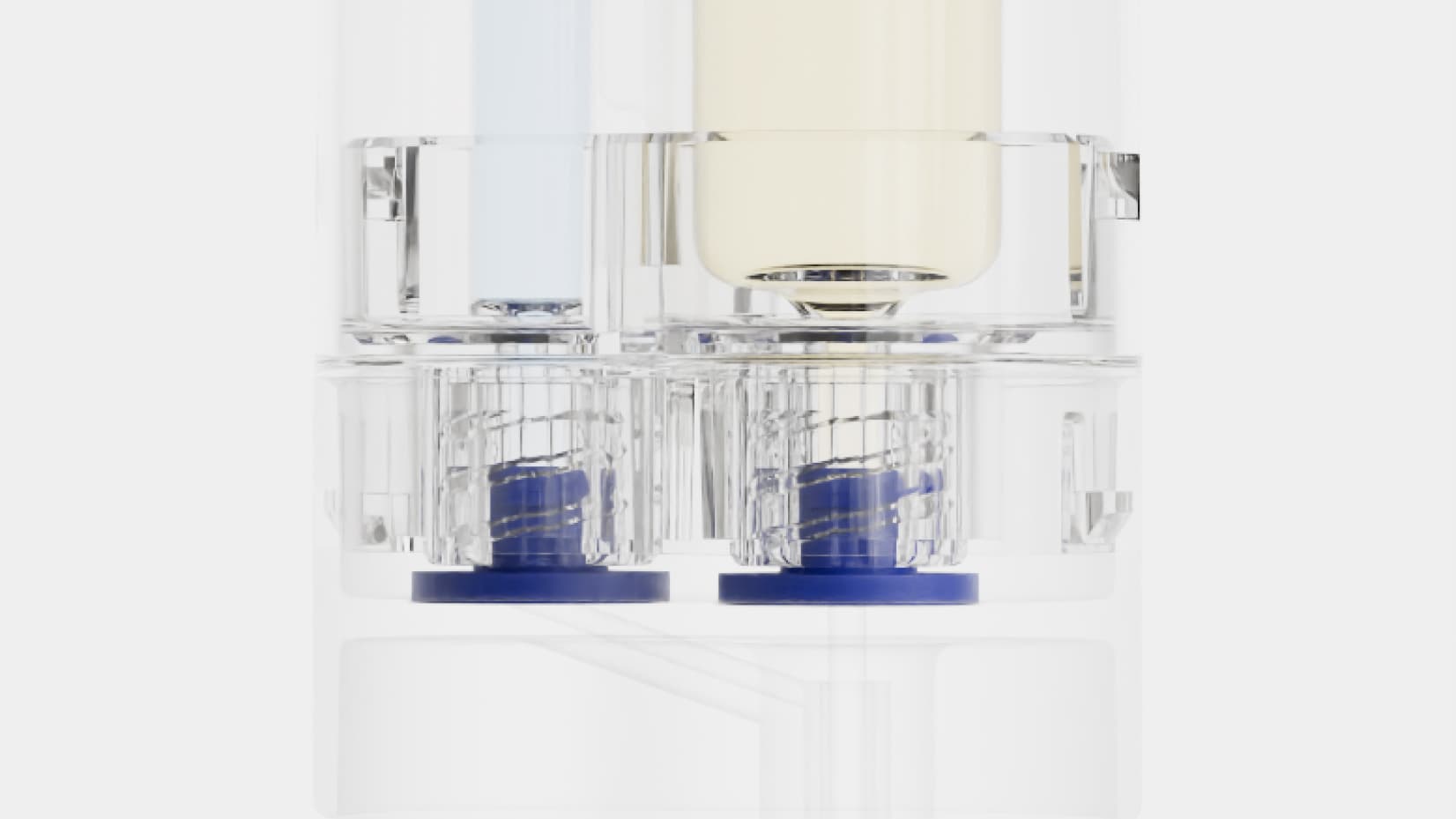
Inside a CoFlo device: the sheath fluid and drug cartridges seated side by side in their hubs
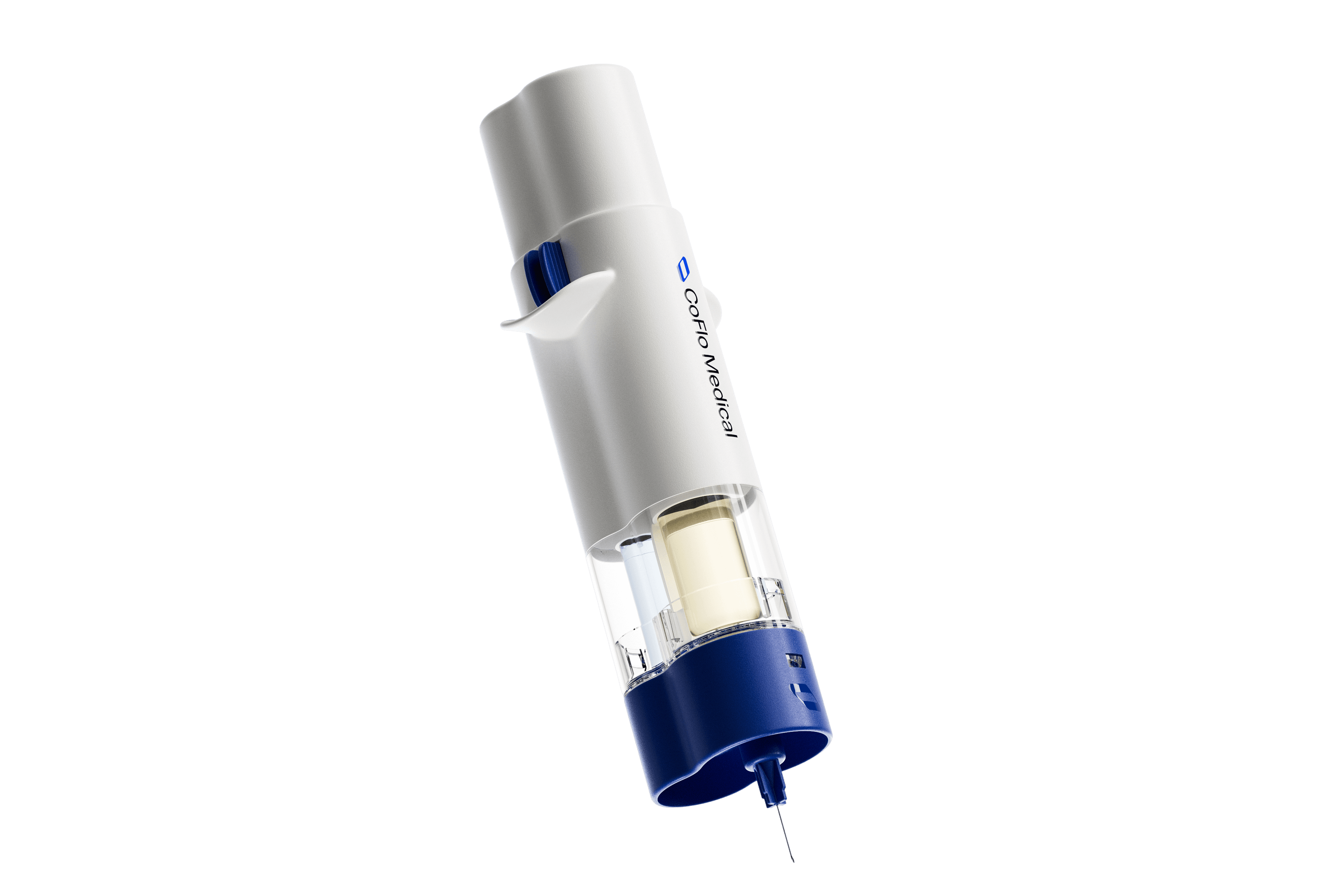
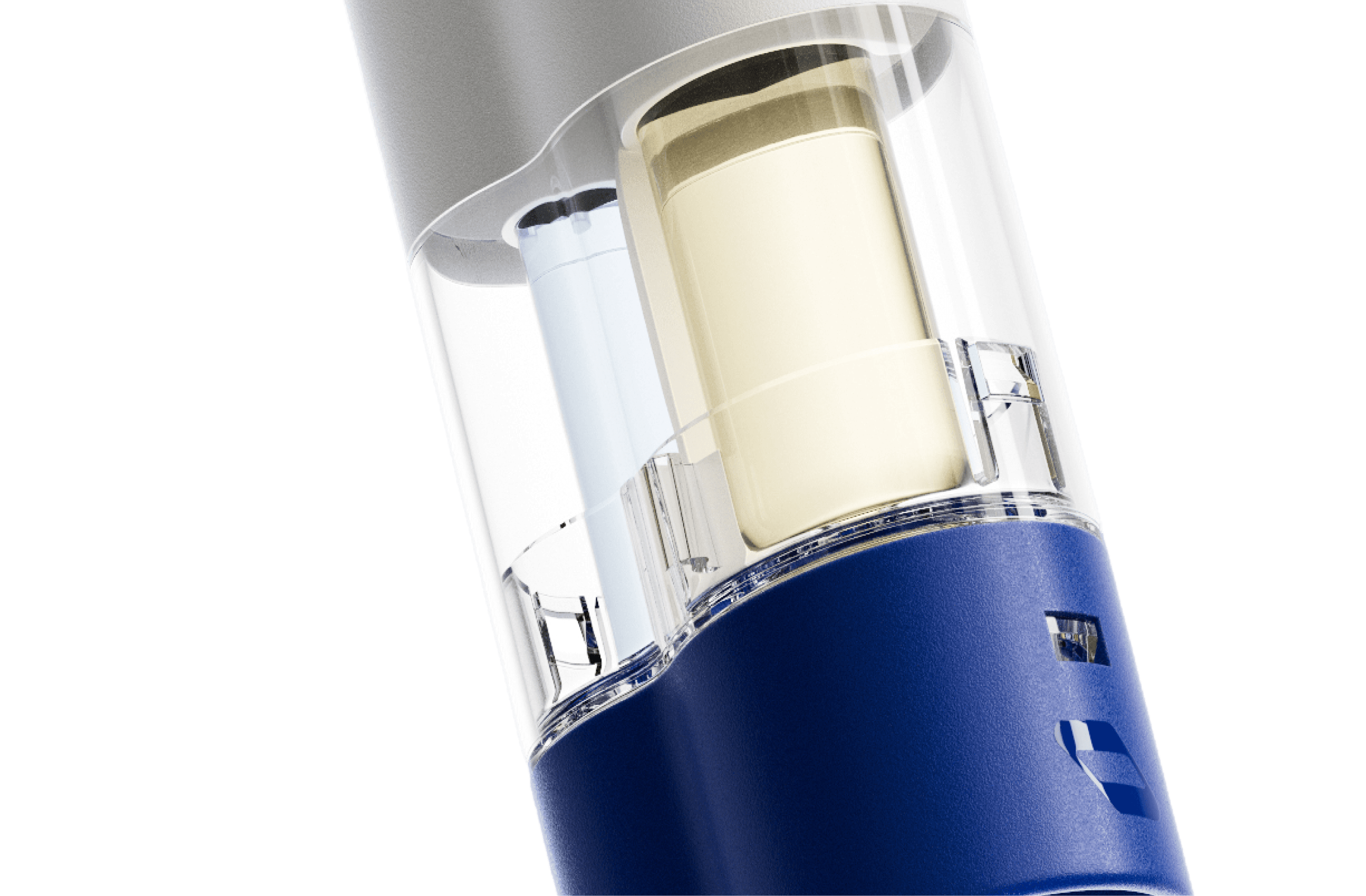
Close-up of the CoFlo cartridge window, showing the sheath fluid reservoir beside the drug reservoir

Break the injectability barrier

  • 01

    IV to subcutaneous conversion

    Turn hours-long hospital infusions into 10-second injections at home.

  • 02

    Dual-drug co-delivery

    Administer two formulations in a single injection.

  • 03

    Extended dosing intervals

    Supports higher per-dose concentrations and conjugated formats.

  • 04

    Reduced injection burden

    Reduce injection volume and time without compromising complexity.

  • 05

    Broader candidate viability

    Carry candidates forward that viscosity would otherwise have ruled out. Gentle delivery for shear-sensitive compounds.

One technology, multiple form factors

Core annular flow is a physical solution that changes how a drug moves through the needle, not what the drug is. It serves as a platform across molecule types, volumes, and routes of administration.

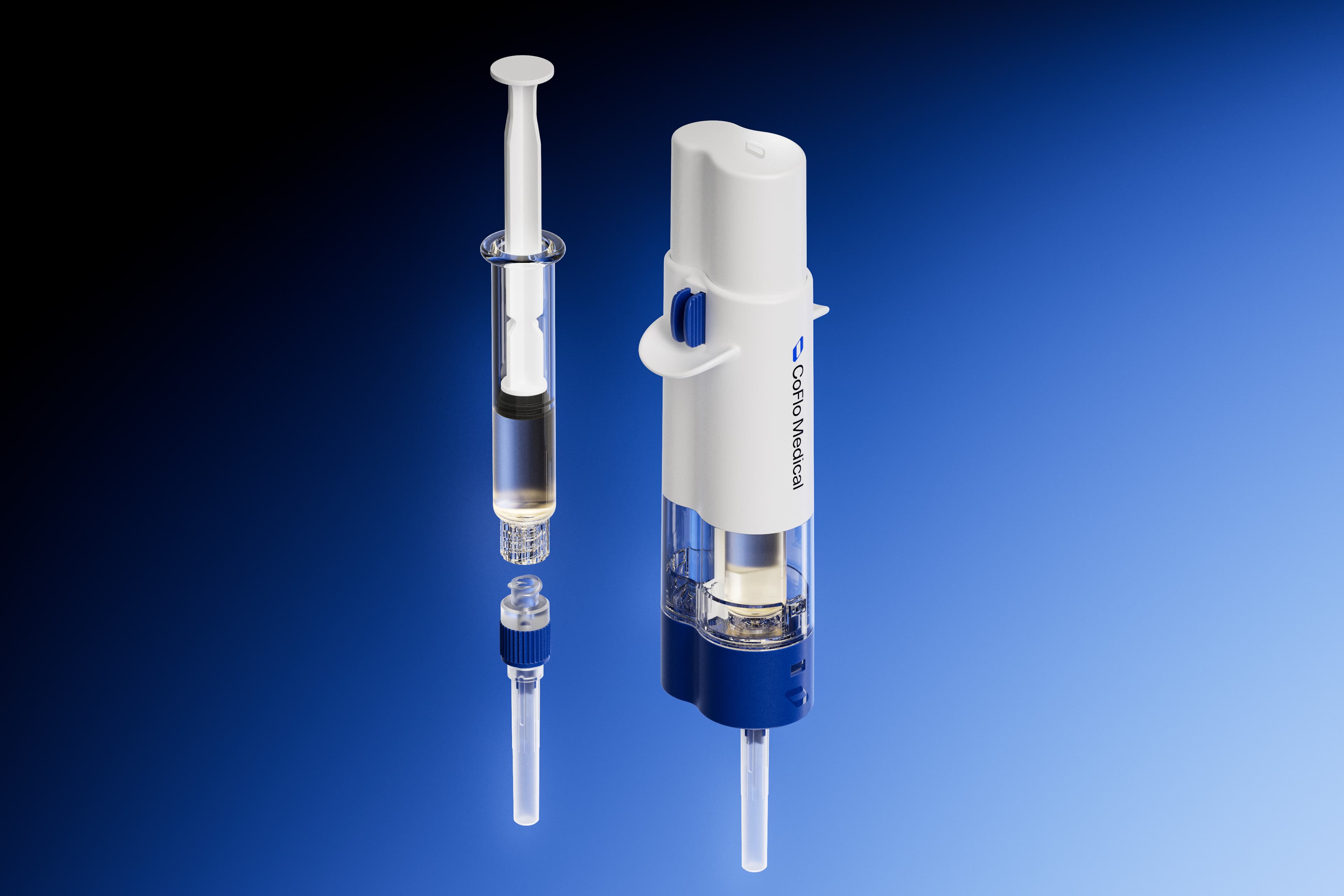
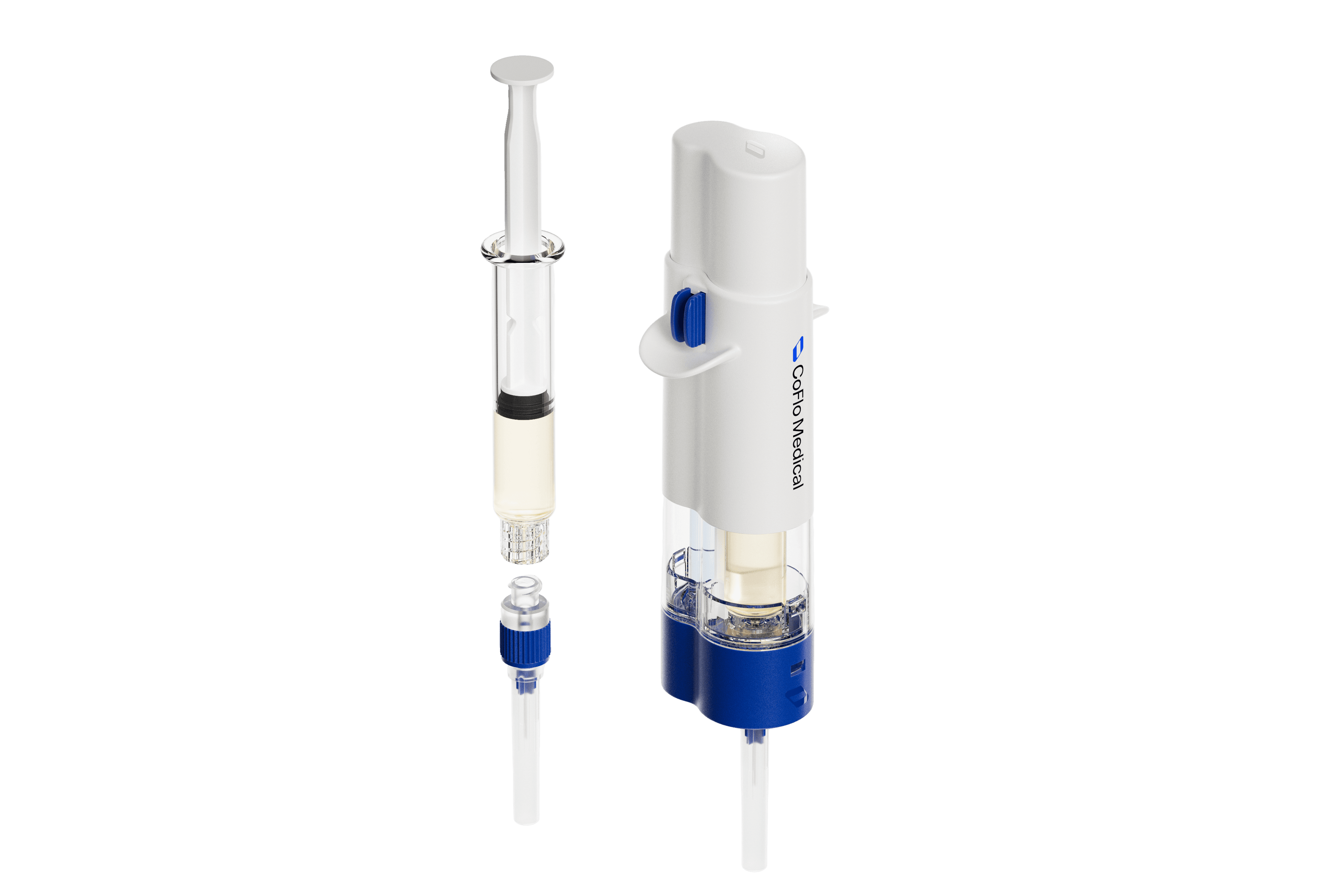
The CoFlo Gen One syringe with its hub, beside the double barrel autoinjector with its CO-AXL Hub
  1. 01

    Gen One hub

    Sheath fluid is stored in a reservoir and is passively entrained to form the core annular flow.

  2. 02

    Double Barrel

    Two syringes hold the sheath fluid and viscous fluid before they form a core annular flow in the CO-AXL Hub.

  3. 03

    CO-AXL Hub

    Adapts two syringes to form the core annular flow.

We aim to make life-saving therapies easier to give and easier to get.

Join our team
  • Portrait of Simon Rufer

    Simon Rufer

    CEO & Co-founder

    During his MIT PhD, Simon uncovered the fundamental fluidic phenomena that stabilize core-annular flows and built the prototypes behind CoFlo's platform. He draws on prior engineering experience at SpaceX and JPL to lead scale-up and commercialization.


  • Portrait of Vishnu Jayaprakash

    Vishnu Jayaprakash

    CBO & Co-Founder

    Vishnu is an experienced startup executive, having founded and lead several ventures including AgZen, where he scaled RealCoverage, a first-of-its-kind vision system for adjuvant spraying, to over 1 million acres internationally. Vishnu completed his PhD at MIT in interfacial phenomena, where he lead the development of early core-annular flow injectors.

  • Portrait of Kripa Varanasi

    Kripa Varanasi

    Co-Founder & Chairman

    Kripa is an MIT Professor of Mechanical Engineering whose work on interfacial phenomena has driven innovations in the medical, energy, water, and agriculture industries. He was previously a lead researcher and project leader at GE Global Research, and has co-founded several startups earning numerous awards.

  • Portrait of Darius Moshfeghi

    Darius Moshfeghi

    Chief Medical Advisor, Ophthalmology

    Dr. Moshfeghi is Professor of Ophthalmology and Chief of Retina at Stanford's Byers Eye Institute. He founded Stanford's vitreoretinal surgery fellowship and established SUNDROP, a telemedicine program for retinopathy of prematurity screening. As a practicing vitreoretinal surgeon, he brings direct experience with ophthalmic procedures and intravitreal delivery, along with experience in clinical trial oversight, steering committees, and ophthalmology product development.

Latest from CoFlo

Inject the uninjectable

Contact us
Made with Modulify